NL
NL EN
EN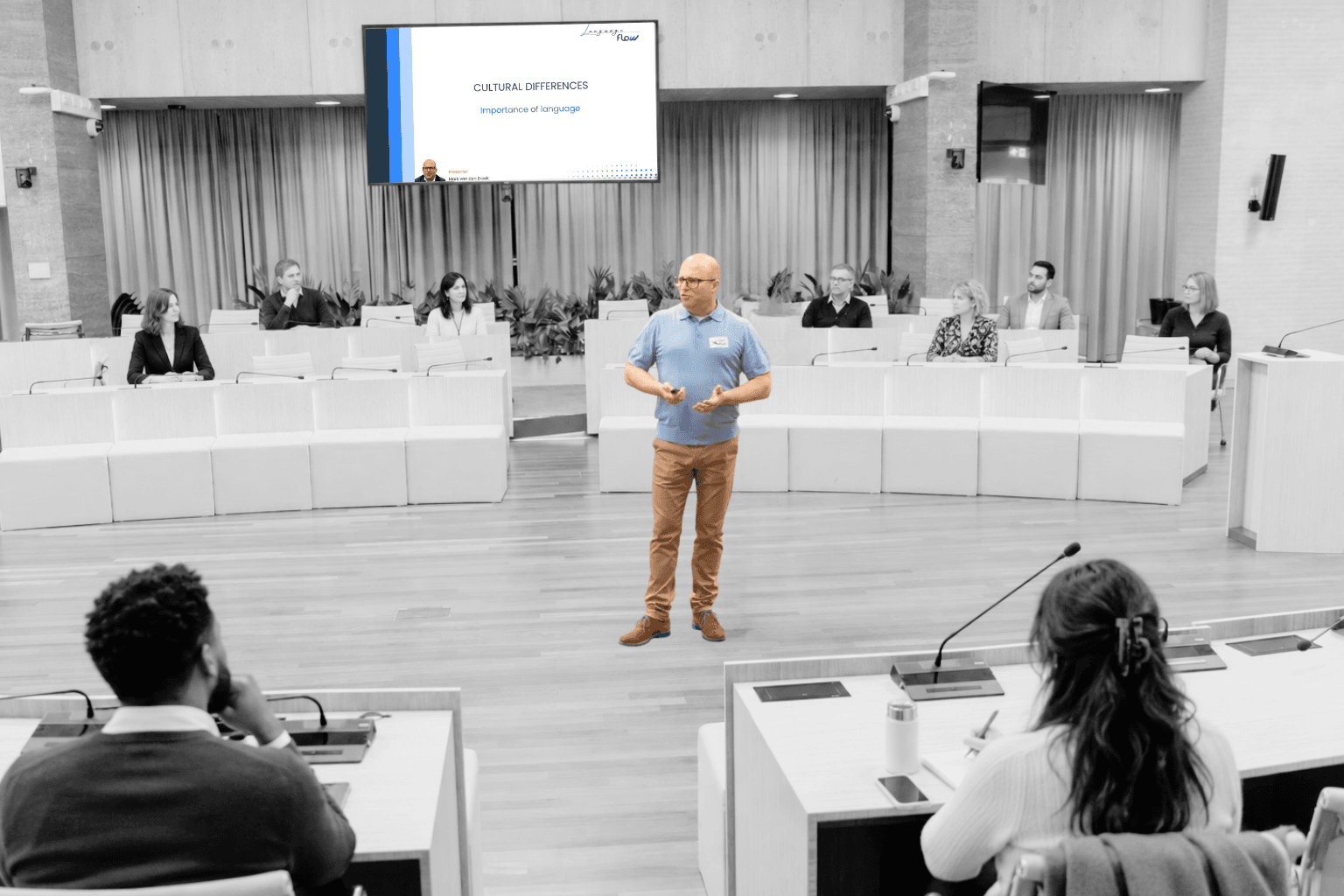
Recommended
Cultural Training
Cultural Differences in the Workplace
More understanding. Clearer communication. Stronger international teams.
All levels
Workshop
At your workplace
They are not about accents or language itself. They're in how someone deals with feedback, authority, silence and collaboration. Click on a scenario to see what's really going on.
Your international colleague nods, says she understands — and then does it her own way. You think: lack of engagement.
In many cultures, saying a direct 'no' — especially to a manager — is considered rude. 'Yes' then means: "I heard you." Not: "I'll do it that way." This isn't unreliability — it's a different communication pattern.
Experienced employee, but always silent. No input, no questions. You wonder whether he's even engaged.
In hierarchical cultures, people don't simply speak up in the presence of managers. They wait for a direct invitation. Silence here is a sign of respect — not disinterest or lack of knowledge.
Your new employee gets stuck but does not ask for help. You think: stubbornness, or too proud to admit it.
In cultures with strong status sensitivity, asking for help is risky — it shows weakness and undermines one's position. This can lead to mistakes going unreported and building up. It's not pride. It's fear of losing face.
4 real-life situations. What's really going on? The answers may surprise you.
Built around the cultural challenges international teams face every day. The workshop addresses the patterns that most commonly cause friction and misunderstandings — and gives your team practical tools for clearer communication and better collaboration.
Dutch people are direct. Others communicate more indirectly. Neither is right or wrong — but if you don't know the difference, everyone misses the point.
In some cultures the manager is always right. In others, pushing back is normal. This determines who speaks, who stays silent — and why.
Direct feedback is normal in the Netherlands. For some people, it can feel hurtful. Learn how to stay honest without causing harm — and how to recognise feedback when it's wrapped up.
A deadline is not the same everywhere. Understand why 'being on time' is culturally loaded — and how to set clear expectations without judging.
Eye contact, silence, distance, gestures — they mean different things in different cultures. What you read as disinterest may be respect. And vice versa.
Some cultures avoid conflict at all costs. Others confront directly. If you don't know this, every conflict gets misread.
No PowerPoint-heavy session. The day focuses on real workplace situations — discussed, role-played and explored in practice.
We open with a short presentation on cultural communication patterns — relatable, concrete and directly linked to your team's work situation. Participants immediately recognise themselves and their colleagues.
We discuss how culture influences the way people communicate, deal with authority, give feedback and collaborate — with real examples from practice.
We discuss your team, the cultures present and what your goals are. No obligations — just a concrete proposal within 48 hours.
The workshop is suitable for any company with an international or multicultural team. Whether you have 5 or 200 employees — if different backgrounds and communication styles come together, this training is relevant.
That's up to you. Ideally a mixed group: both Dutch and international employees. The conversation that emerges when both sides are present is often the most valuable. We'll advise on this during the intake.
In Dutch by default. On request also partly or fully in English, so that all international colleagues can participate fully.
A language training improves language skills. This workshop focuses on something different: the invisible rules and patterns that determine how people communicate — regardless of the language they speak. Both can exist alongside each other, and reinforce one another.
The price depends on the duration and number of participants. Request a no-obligation quote — we respond within 48 hours with a concrete proposal.
More understanding. Clearer communication. Stronger international teams.